


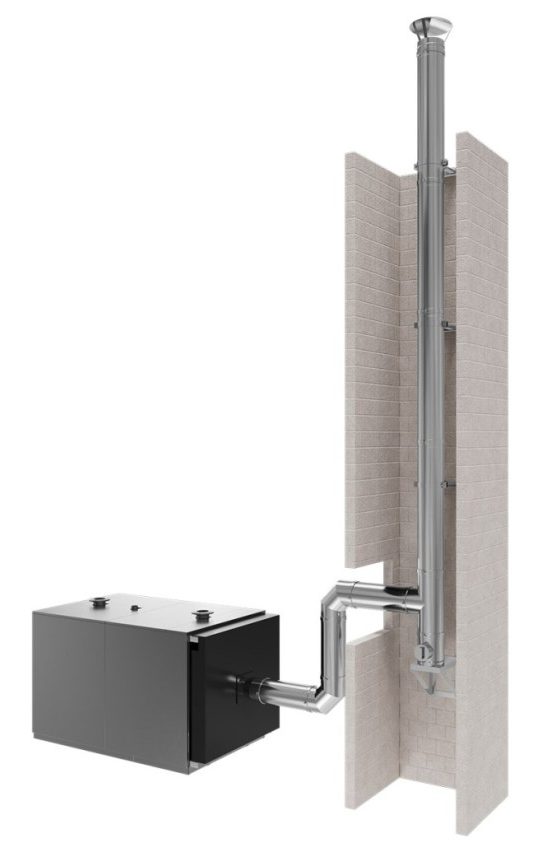
 Single Wall Chimney Systems
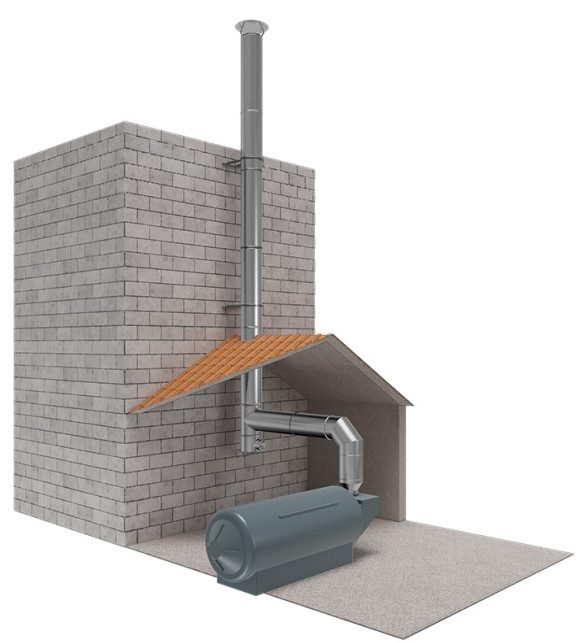 Double Wall Chimneys
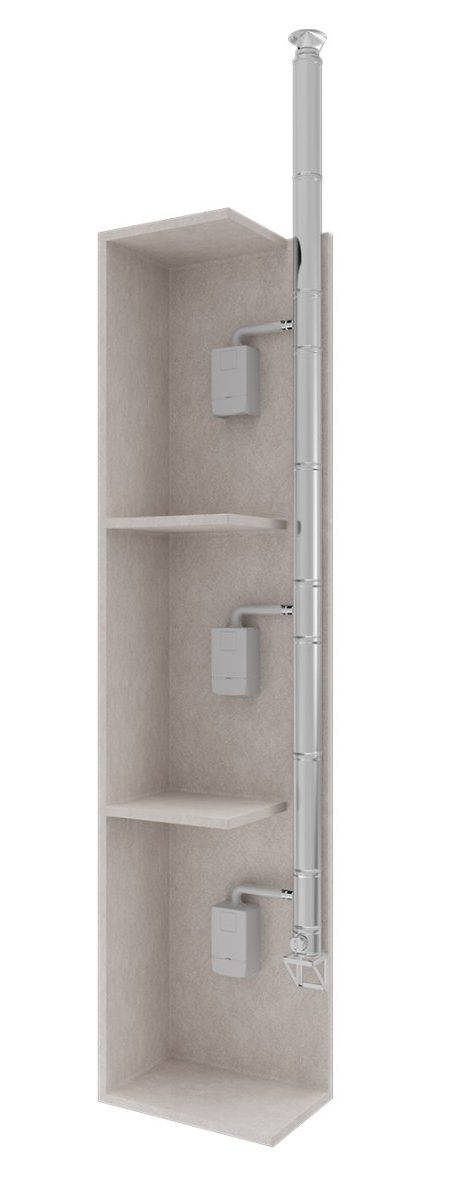 LAS Air/Exhaust Gas Chimney Systems
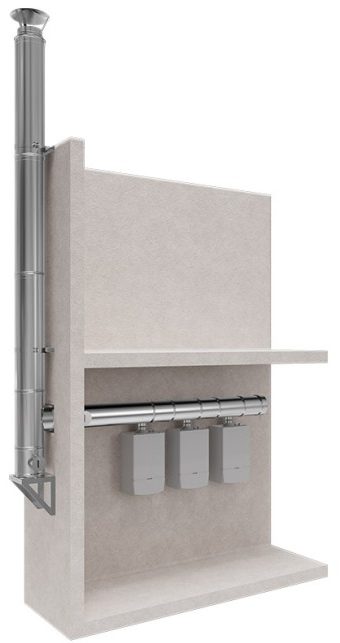
Up to 9 boilers, 1 chimney
Kapella cascade systems connect up to 9 condensing boilers through a single manifold and vertical chimney, significantly reducing infrastructure requirements and installation costs.

We produce cascade chimney systems which collect and discharge the flue gases of up to 9 condensing boilers into a common chimney. Positive pressure sealing is applied at all connections. The system is also positive pressure tested to 200Pa.
Kapella makes four chimney systems. Tell us where the flue runs and what it serves, and we will show you the right one.
Where does the chimney run, and what does it serve?
A collector gathers the flue gases from up to 9 condensing boilers into one vertical chimney.
What is a cascade chimney system? A cascade chimney is used to discharge the flue gases of a number of condensing boilers into one common chimney. Each boiler is fitted with a branch pipe that connects to a horizontal manifold. The manifold then channels the flue gases from all currently operating boilers into one stream and subsequently directs this to a common vertical chimney.
Modern commercial and industrial heating installations increasingly rely on multiple condensing boilers operating in parallel to achieve higher energy efficiency, redundancy, and load flexibility. Kapella's cascade chimney systems are specifically engineered to collect and expel flue gases from up to 9 interconnected condensing boilers through a single vertical chimney — safely, efficiently, and in full compliance with European pressure standards.
In a cascade configuration, each boiler connects to a horizontal collector manifold via individual branch pipes. The collector gathers flue gases from all active boilers and directs them into a single vertical chimney shaft for discharge to the atmosphere. This eliminates the need for separate chimney runs for each boiler, saving space, reducing installation costs, and simplifying building infrastructure.
Because condensing boilers operate under positive pressure, every component in a Kapella cascade system — from branch connections and collectors to the main vertical shaft — is manufactured with precision-sealed joints and high-performance gaskets. Each system is pressure-tested at 200 Pa to ensure zero leakage under operating conditions, meeting the strict requirements of positive pressure flue gas applications.
Kapella cascade chimney systems are constructed from AISI 316L stainless steel with continuous TIG/WIG welding, providing excellent resistance to the acidic condensate produced by condensing boilers. The smooth interior surface minimizes flow resistance and prevents condensate pooling, while the modular design allows flexible configuration for different boiler room layouts, boiler counts, and building heights.
All systems are CE approved and compliant with EN 1856 and EN 13384 calculation standards. Kapella's engineering team provides complete system design, including flue gas flow calculations, collector sizing, and chimney dimensioning based on your specific boiler configuration.
Each condensing boiler is connected to the cascade system via an individual branch pipe with sealed, gasketed joints rated for positive pressure operation.
Branch pipes feed into a horizontal manifold that merges flue gases from all active boilers into a single stream. The manifold is sized to handle the combined output from up to 9 boilers.
Combined flue gases travel upward through the main vertical chimney, which is designed for positive pressure and pressure tested at 200Pa to ensure complete seal integrity.
Flue gases are safely expelled to the atmosphere via a terminal cap designed to prevent rain ingress and wind backflow, maintaining consistent draught performance.
Kapella cascade systems connect up to 9 condensing boilers through a single manifold and vertical chimney, significantly reducing infrastructure requirements and installation costs.
Every joint is sealed and the complete system is pressure tested at 200Pa, ensuring zero leakage under positive pressure condensing boiler operating conditions.
The acidic condensate produced by condensing boilers requires a material with superior corrosion resistance. AISI 316L stainless steel construction ensures long-term performance without material degradation.
Kapella engineers design each manifold to match the specific boiler count, output capacity and boiler room layout, optimising flow distribution and minimising back pressure.
Full compliance with European chimney product and flue gas flow calculation standards, supported by Kapella's in-house engineering documentation.
If your query is not listed below, please include it with your quotation request. One of our engineers will then respond to you directly.
Query an engineerA cascade chimney connects multiple condensing boilers – up to 9 units – to a single vertical chimney through a horizontal manifold. Instead of a separate chimney for each boiler, all flue gases are combined and expelled through one shared chimney.
Kapella cascade systems support up to 9 condensing boilers on a single manifold and chimney. The exact number depends on each boiler's output, flue gas volume and chimney diameter, all determined during the design phase.
Condensing boilers push flue gases out under positive pressure. Unlike natural draught systems, every joint must be gas-tight to prevent leakage. Kapella cascade systems are pressure tested at 200Pa to confirm seal integrity throughout.
Kapella cascade systems are made from AISI 316L stainless steel – the same grade used in chemical and marine environments. This provides excellent resistance to the acidic condensate produced by condensing boilers.
Yes. Kapella's modular design allows additional boiler connections to be added to the manifold, provided the original chimney diameter and manifold were sized with expansion in mind. We recommend discussing future expansion during the initial design phase.
Yes. Kapella's engineering team provides flue gas flow calculations to EN 13384, including manifold sizing, chimney dimensioning, pressure loss analysis and condensate drainage planning for the specific boiler configuration.
This information will enable us to calculate the correct chimney diameter and modules. We can then provide you with a detailed quotation for comparison.
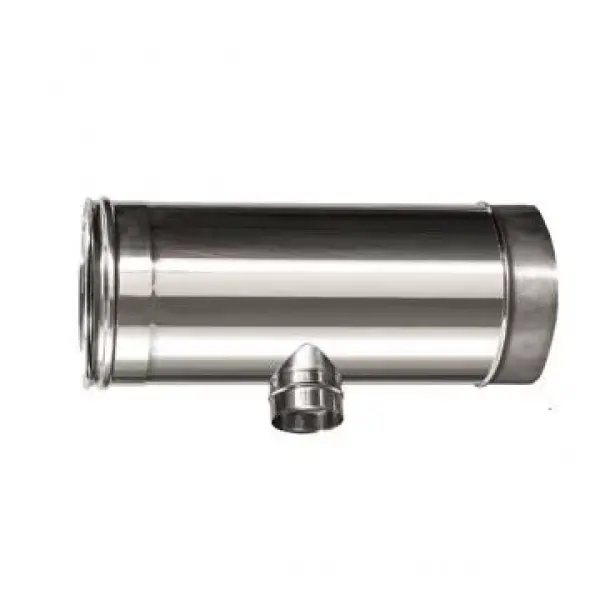 Cascade Collector Straight Module
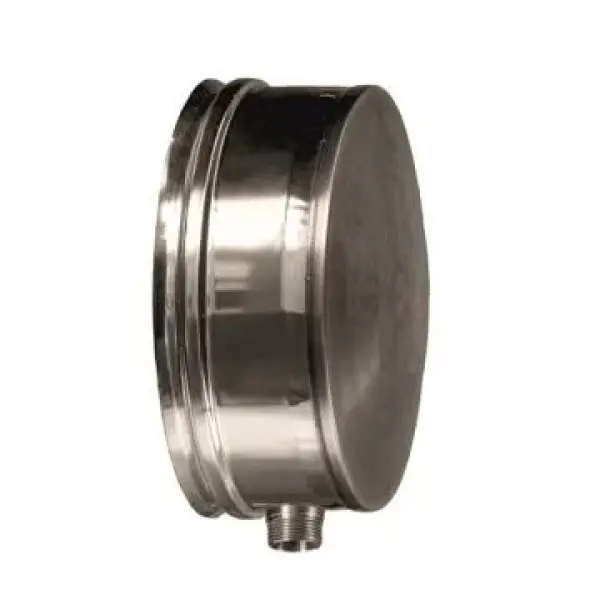 Cascade Drainage